
Social Media For Business

Content Marketing Trends: Beyond Just AI

Content Marketing Trends

As we move into 2025, content marketing in Australia is evolving rapidly. While AI-driven content generation and automation have been making waves, successful brands are now looking beyond AI to craft meaningful and engaging content strategies. Here are the top content marketing trends shaping the landscape in Australia.

1. Authenticity and Human-Centric Storytelling

Audiences are craving real, human stories. With AI-generated content flooding the digital space, brands that prioritize authenticity will stand out. This means incorporating user-generated content (UGC), brand storytelling, and personal narratives from employees and customers to build trust and credibility.

2. Sustainability and Ethical Marketing

Australian consumers are increasingly conscious of sustainability and corporate responsibility. Brands that communicate their eco-friendly initiatives, ethical supply chains, and community contributions through content marketing will resonate more with their audience. This includes transparency in messaging and showcasing real-world impact.

3. Interactive and Immersive Content

Beyond static blog posts and videos, interactive content such as quizzes, polls, and augmented reality (AR) experiences are gaining traction. With platforms like Instagram, TikTok, and immersive web experiences, brands can engage audiences in creative ways that go beyond passive consumption.

4. Voice Search and Audio Content

With the rise of smart speakers and voice assistants, optimizing content for voice search is essential. Additionally, podcasts, interactive audio stories, and audiobooks are becoming an integral part of content strategies, offering an engaging alternative to text-heavy formats.

5. Hyper-Personalization and First-Party Data

With tighter data privacy regulations in Australia, brands are moving away from third-party cookies and focusing on first-party data collection. This allows for hyper-personalized content experiences, delivering the right message to the right audience at the right time.

6. Community-Driven Content Marketing

Brands are building strong communities rather than just broadcasting messages. Engaging with niche online groups, encouraging discussions, and creating exclusive membership-based content are effective ways to foster brand loyalty and advocacy.

7. Short-Form and Snackable Content

Attention spans are shorter than ever, making bite-sized content crucial. Platforms like YouTube Shorts, TikTok, and Instagram Reels are driving high engagement rates. Marketers need to focus on quick, engaging storytelling that delivers value in seconds.

8. Hybrid Content Strategies: AI + Human Creativity

While AI tools assist with content creation, human creativity remains irreplaceable. The most effective strategies blend AI’s efficiency with human emotion and insight to create compelling, high-quality content.

Final Thoughts

AI is an undeniable force in content marketing, but its true power lies in complementing human creativity rather than replacing it. Australian brands that embrace authenticity, sustainability, interactivity, and personalization will thrive in 2025. By staying ahead of these trends, businesses can craft content strategies that not only engage but also build long-lasting relationships with their audiences.


Breaking News on Social: How Gen Z Engages with Digital Media

Breaking News on Social

The way we consume news has undergone a massive transformation over the last two decades, and at the forefront of this change is Generation Z. Born between 1997 and 2012, Gen Z teens are reshaping how information is shared, digested, and acted upon. With digital tools and social media platforms deeply woven into their daily routines, this generation exemplifies a seismic shift in news consumption.

This blog delves into how digital and social media have changed the way Gen Z teens interact with news, highlighting the opportunities, challenges, and implications for the future.

The Shift Towards Digital-First News

Gone are the days when newspapers and television were the primary sources of news. For Gen Z, smartphones are their news hubs. Whether scrolling through Instagram stories, TikTok, or Twitter (now X), they are more likely to come across breaking news in their social feeds than through traditional outlets.

Key statistics back this up:

  • A 2023 study by Pew Research found that over 60% of teens report getting news from social media daily.
  • TikTok, once primarily an entertainment app, has grown into a news source for 33% of teens aged 13–17.

The appeal of digital platforms lies in their accessibility and real-time updates. News breaks faster online, and Gen Z values immediacy over depth when staying informed.

Social Media as a News Source

Social media platforms have evolved from mere tools of connection to powerful arenas of information exchange. Platforms like Snapchat and TikTok deliver snackable news content through short, engaging formats that resonate with Gen Z’s attention span and multimedia preferences.

  1. Personalised News Feeds
    Algorithms tailor content based on user interests, creating a highly personalised experience. This is both an advantage and a limitation. On one hand, Gen Z receives news that aligns with their interests. On the other, it creates echo chambers, limiting exposure to diverse perspectives.
  2. Interactive Engagement
    Unlike traditional media, social media invites interaction. Teens can comment, share, and even participate in live discussions. This active engagement fosters a sense of connection with the news and encourages civic involvement.

The Role of Influencers and Peer Networks

For Gen Z, influencers often act as unofficial news anchors. Teens trust creators and peers more than faceless corporations, relying on them for updates on everything from global crises to pop culture trends. Influencers break down complex news into digestible pieces, often adding a personal or humorous twist to keep the audience engaged.

However, this reliance has a downside. Without the journalistic rigour of traditional outlets, information from influencers can lack credibility, spreading misinformation or biased interpretations.

Visual Storytelling and Viral Trends

Gen Z is a visually driven audience. Infographics, memes, and videos dominate their digital spaces, making these formats essential for news consumption. Instagram carousels summarising current events or TikToks explaining political movements illustrate how the news industry is adapting to suit this generation’s media diet.

Viral trends also play a crucial role. News stories tied to hashtags or challenges often gain traction quicker among Gen Z teens. For instance, climate activism gained momentum through trends like #FridaysForFuture and the viral appeal of Greta Thunberg’s speeches.

Challenges in the Digital News Landscape

While the digital shift has opened up vast avenues for information dissemination, it’s not without challenges:

  1. Misinformation and Fake News
    The rise of social media as a primary news source makes Gen Z vulnerable to misinformation. With platforms like TikTok and Instagram prioritising engagement over fact-checking, misleading narratives can spread like wildfire.
  2. Shortened Attention Spans
    The brevity of social media content, while engaging, often oversimplifies nuanced topics. Gen Z’s preference for quick updates can lead to shallow understanding and reduced critical thinking around complex issues.
  3. Overload and Anxiety
    The 24/7 nature of digital news can overwhelm teens, contributing to “news fatigue” or anxiety. Constant exposure to global crises or political strife through their feeds can leave them feeling powerless and disconnected.

How Teens Are Shaping the News

Gen Z isn’t just consuming news—they’re shaping it. Social media provides a platform for teens to amplify their voices, organise movements, and advocate for change. Whether it’s through viral petitions or coordinated protests, Gen Z uses digital tools to challenge traditional power structures and demand accountability.

Examples include:

  • The Black Lives Matter movement, which gained global momentum through Gen Z activists on Instagram and Twitter.
  • Environmental campaigns like #TeamSeas, mobilised through influencers and social media fundraisers.

Implications for the Future of News

The transformation of news consumption among Gen Z teens offers valuable insights for the future:

  1. Increased Democratisation
    Digital platforms democratise news by giving everyone a voice. This is reshaping the role of traditional journalism, forcing it to become more inclusive and accessible.
  2. Focus on Multimedia and Interactivity
    News outlets must continue adapting to meet Gen Z’s preference for visual storytelling and interactive formats. Live Q&A sessions, infographics, and gamified news experiences could dominate future strategies.
  3. Prioritising Media Literacy
    Teaching Gen Z how to identify credible sources and distinguish fact from fiction will be critical. Governments and educational institutions must implement programs to foster critical thinking and digital literacy.

Conclusion

For Gen Z teens, digital and social media aren’t just tools—they’re the foundation of their daily lives, shaping how they consume and interact with news. As this generation matures, their habits will influence how news evolves, pushing traditional outlets to innovate and adapt.

By understanding the nuances of Gen Z’s news consumption patterns, we can ensure that the future of journalism remains relevant, engaging, and trustworthy in an ever-changing digital landscape.

Aussie Social Media Managers Deliver Valuable Insights and Actionable Strategies to Elevate Brand Presence for Businesses of All Sizes

Aussie Social Media Managers

In today’s digital landscape, social media has transcended from a mere communication platform to a powerful marketing tool. For businesses, whether a small café nestled in the heart of Sydney or a large multinational corporation, social media managers have become essential in navigating this dynamic environment. They deliver valuable insights and actionable strategies that can elevate brand presence and foster meaningful connections with audiences. This blog post explores how Aussie social media managers accomplish this across various sectors and business sizes.

Understanding the Landscape

Australia’s social media ecosystem is diverse, with platforms like Facebook, Instagram, LinkedIn, TikTok, and Twitter catering to different audiences and content types. With approximately 20 million active social media users in Australia, understanding these platforms’ unique characteristics is crucial for any business aiming to succeed online.

For instance, younger demographics are increasingly gravitating towards social media platform like TikTok and Instagram, while LinkedIn remains the go-to for B2B engagement. Aussie social media managers leverage this knowledge to develop strategies that align with the specific demographics and behaviours of their target audiences, ensuring that brands can effectively engage with potential customers.

1. Tailored Strategy Development

A successful social media strategy begins with a deep understanding of the business’s goals, target audience, and competitive landscape. Aussie social media managers conduct comprehensive research, analysing industry trends, audience demographics, and competitor activities to inform their strategies.

For example, a small local café might focus on building community ties by promoting local events, while a larger retailer might aim for national reach through influencer partnerships and online advertising. By aligning social media strategies with business objectives—whether it’s increasing foot traffic, enhancing brand loyalty, or driving online sales—social media managers ensure their efforts are effective and impactful.

2. Content Creation and Curation

Content is king in the realm of social media. Aussie social media managers excel in crafting high-quality, engaging content that resonates with audiences. They understand that the type of content shared can significantly influence brand perception and engagement levels.

Visual Storytelling: Social media thrives on visuals. From stunning photos to engaging videos, visual content can capture attention more effectively than text alone. Aussie social media managers employ professional photography and videography to showcase products, services, and brand stories.

User-Generated Content (UGC): Encouraging customers to share their experiences can foster authenticity. Social media managers often initiate campaigns inviting followers to post photos using a specific hashtag, which can then be shared on the brand’s profile. This approach not only builds community but also provides fresh content that resonates with potential customers.

Diverse Content Types: Successful managers curate a mix of content types, including educational posts, promotions, testimonials, and interactive content like polls and quizzes. For instance, a fitness brand might share workout tips, customer success stories, and engaging challenges that invite participation. This diverse approach keeps the audience engaged and eager to interact with the brand.

3. Building Community Engagement

In an age where consumers seek connection and authenticity, fostering community engagement is paramount. Aussie social media managers actively interact with followers, responding to comments and messages promptly and fostering conversations that strengthen brand loyalty.

Creating a Sense of Belonging: Brands that foster a community around their values and mission often see enhanced loyalty. Social media managers might create Facebook groups for customers to share experiences, seek advice, or participate in discussions related to the brand’s niche. For example, a local bakery could create a group for baking enthusiasts to share recipes and tips, reinforcing the brand’s position as a community hub.

Engagement Strategies: Aussie social media managers deploy various strategies to boost engagement, including live Q&A sessions, giveaways, and contests that encourage followers to tag friends and share content. By creating opportunities for interaction, they transform passive followers into active participants, enhancing brand visibility and loyalty.

4. Leveraging Analytics for Continuous Improvement

The beauty of social media lies in its data-driven nature. Aussie social media managers utilise various analytics tools to monitor performance and gain insights into audience behaviour. Key metrics such as engagement rates, reach, impressions, and conversion rates inform ongoing strategy adjustments.

Identifying Success Patterns: By analysing which posts generate the most engagement, social media managers can identify patterns and replicate successful content. For instance, if a humorous post about a product receives high engagement, they might explore similar tones in future content.

A/B Testing: Managers often employ A/B testing for different types of content, captions, or posting times to determine what resonates best with their audience. This continuous cycle of testing, learning, and adjusting ensures that social media strategies remain relevant and effective.

5. Staying Ahead of Trends and Changes

The digital landscape is in constant flux, with new trends, tools, and platforms emerging regularly. Aussie social media managers stay ahead of the curve by continuously researching and adapting to these changes.

Trend Analysis: By keeping a finger on the pulse of industry trends—such as the rise of short-form videos, sustainability messaging, or interactive content—social media managers can help brands remain relevant. For example, during the COVID-19 pandemic, many businesses pivoted their marketing strategies to highlight safety protocols and community support, resonating with audiences’ needs.

Adapting to Algorithm Changes: Social media platforms frequently update their algorithms, impacting how content is distributed. Aussie social media managers keep abreast of these changes and adjust their strategies accordingly. For instance, if a platform prioritises video content, they might focus more on creating engaging video posts to maintain visibility.

6. Paid Advertising Strategies

While organic reach is valuable, leveraging paid advertising can significantly amplify brand visibility. Aussie social media managers develop targeted advertising campaigns that reach specific demographics based on age, interests, location, and behaviours.

Localised Advertising for Small Businesses: For small businesses, geo-targeted ads can drive foot traffic to physical locations. For instance, a local restaurant can target ads to nearby users promoting a special offer, encouraging immediate visits.

Broader Campaigns for Larger Brands: For larger brands, broader campaigns can introduce new products or drive awareness across various markets. Managers optimise ad budgets by analysing performance and reallocating resources to the most effective ads, ensuring maximum return on investment.

7. Crisis Management and Reputation Monitoring

In the fast-paced world of social media, businesses may face challenges that threaten their reputation. Aussie social media managers are trained to handle such crises with professionalism and tact.

Proactive Monitoring: Social media managers utilise tools to monitor brand mentions and track sentiment analysis in real time. This proactive approach allows them to address issues before they escalate, ensuring timely and effective responses.

Transparent Communication: During a crisis, clear and transparent communication is essential. Social media managers craft messages that acknowledge the issue, express empathy, and outline steps being taken to resolve it. For example, if a product recall occurs, a swift and transparent response can mitigate negative impact and demonstrate the brand’s commitment to customer safety.

8. Collaboration and Networking

Collaboration can amplify a brand’s reach and engagement significantly. Aussie social media managers often work with influencers, other businesses, and industry leaders to expand their brand’s visibility.

Influencer Partnerships: Collaborating with local influencers can enhance credibility and reach within specific demographics. For instance, a new clothing brand may partner with fashion influencers to showcase their products in real-world settings, generating authentic engagement and interest.

Community Engagement through Local Partnerships: Businesses can also collaborate with local organisations or events, showcasing their commitment to the community. For example, a café might partner with a local farmers’ market, sharing posts that promote fresh, locally-sourced ingredients. Such partnerships not only enhance brand visibility but also position the business as a community-focused entity.

Conclusion

Aussie social media managers play an indispensable role in elevating brand presence for businesses of all sizes. Through tailored strategies, engaging content creation, proactive community engagement, data-driven decision-making, and effective crisis management, they provide the insights and tools necessary for brands to thrive in the competitive digital landscape.

As the social media landscape continues to evolve, businesses that prioritise effective social media management will be better positioned to foster customer loyalty, drive engagement, and ultimately achieve their marketing objectives. By leveraging the expertise of social media managers, businesses can not only enhance their online presence but also cultivate lasting relationships with their audiences, paving the way for sustainable growth in the ever-changing world of social media.

Identifying Keyword Cannibalization Using OpenAI’s Text Embeddings

Using OpenAI’s Text Embeddings

In the ever-evolving landscape of search engine optimization (SEO), maintaining a robust online presence requires constant vigilance and adaptation. One common yet often overlooked issue in SEO is keyword cannibalization. This occurs when multiple pages on a website target the same or similar keywords, leading to internal competition and potentially diluting the website’s overall ranking potential. Traditional methods of identifying keyword cannibalization involve manual analysis and the use of SEO tools, but recent advancements in natural language processing (NLP) offer a more sophisticated approach. This blog explores how OpenAI’s text embeddings can be leveraged to identify and mitigate keyword cannibalization, with a focus on applications relevant to Australian businesses.

Understanding Keyword Cannibalization

Keyword cannibalization happens when two or more pages from the same website compete for the same keyword, confusing search engines about which page to prioritise. This can lead to several issues:

  • Reduced Ranking Potential: Instead of one strong page, you have several mediocre ones.
  • Confused Search Engines: Search engines struggle to determine which page is more relevant.
  • Wasted Crawl Budget: Search engines may waste resources crawling multiple similar pages.

For instance, if a Melbourne-based e-commerce site sells eco-friendly products and has multiple pages targeting “sustainable shopping Melbourne,” it might experience keyword cannibalization. Instead of one authoritative page, the site might have several less impactful pages.

The Power of Text Embeddings

Text embeddings are a type of representation where words, phrases, or even entire documents are mapped to vectors of real numbers. These vectors capture semantic meaning, enabling more nuanced analysis of textual content. OpenAI’s text embeddings, in particular, have been trained on vast datasets, allowing them to understand and represent complex language patterns.

By leveraging text embeddings, we can move beyond simple keyword matching to a deeper analysis of content similarity. This approach can help in identifying keyword cannibalization by assessing the semantic similarity between pages.

How OpenAI’s Text Embeddings Work

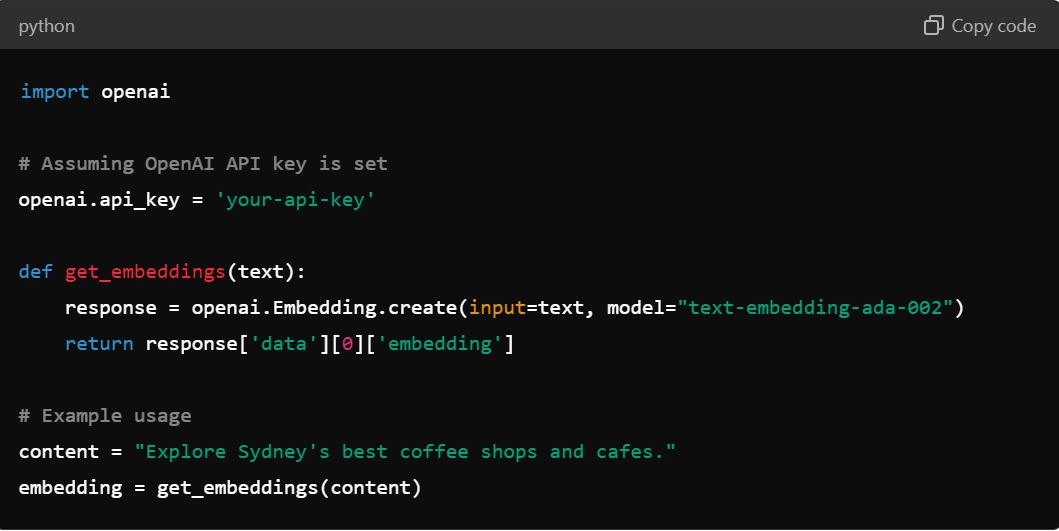
OpenAI’s text embeddings convert textual data into high-dimensional vectors. Here’s a simplified breakdown:

  1. Input Text: A piece of text is inputted into the embedding model.
  2. Encoding: The text is encoded into a numerical vector.
  3. Vector Comparison: Vectors from different texts can be compared to assess similarity.

For example, two blog posts about “Sydney’s best coffee shops” might use different wording but convey similar content. Text embeddings can quantify this similarity, making it easier to identify cannibalization issues.

Implementing Text Embeddings for Keyword Cannibalization

Step 1: Collect Data

Gather all the content from your website, including blog posts, product pages, and landing pages. For an Australian business, this might involve extracting data from various categories such as tourism, e-commerce, and local services.

Step 2: Generate Embeddings

Use OpenAI’s API to generate embeddings for each piece of content. This involves sending the text data to the API and receiving the corresponding vector representations.

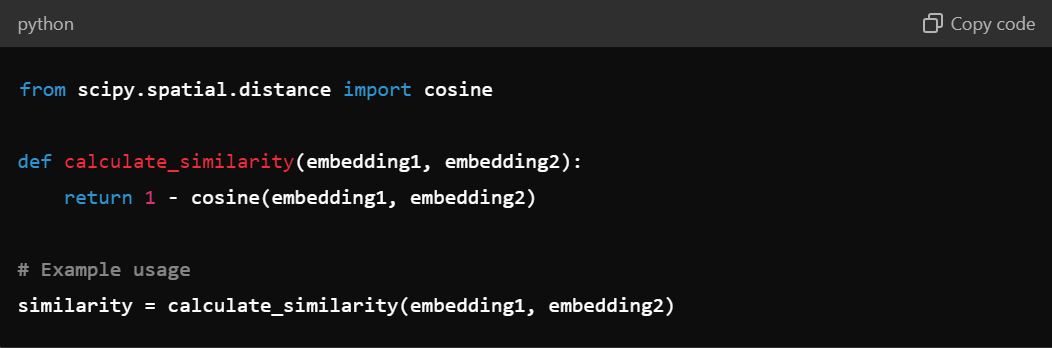
Step 3: Calculate Similarity

Calculate the cosine similarity between vectors to determine how closely related the content pieces are. Cosine similarity ranges from -1 to 1, with 1 indicating identical content and 0 indicating no similarity.

Step 4: Identify Cannibalization

Set a threshold for similarity. Content pairs exceeding this threshold can be flagged for potential cannibalization. For example, a threshold of 0.8 might indicate significant overlap.

Step 5: Take Action

Once cannibalization is identified, take steps to consolidate or differentiate the content. This might involve merging similar pages, creating more distinct content, or optimising internal linking structures.

Case Study: An Australian Travel Blog

Consider an Australian travel blog with sections on Sydney, Melbourne, and Brisbane. By using OpenAI’s text embeddings, the blog owners can identify overlapping content about “top tourist attractions” in each city. Here’s a hypothetical scenario:

  1. Data Collection: Gather content from blog posts on Sydney, Melbourne, and Brisbane.
  2. Generate Embeddings: Create embeddings for each post.
  3. Calculate Similarity: Compare embeddings to identify similarities.
  4. Identify Cannibalization: Flag posts with high similarity scores.
  5. Take Action: Merge or differentiate content to improve SEO.

Benefits of Using Text Embeddings

Enhanced Precision

Unlike traditional keyword analysis, text embeddings consider the context and meaning of content, leading to more accurate identification of cannibalization.

Scalability

Text embeddings can handle large volumes of data, making them suitable for websites with extensive content.

Insightful Analysis

By understanding semantic similarities, businesses can gain deeper insights into their content strategy and make more informed decisions.

Challenges and Considerations

Computational Resources

Generating and comparing embeddings can be computationally intensive, requiring significant processing power.

Threshold Setting

Determining the appropriate similarity threshold requires experimentation and may vary based on the specific context.

Continuous Monitoring

Keyword cannibalization is not a one-time issue. Continuous monitoring and adjustment are necessary to maintain optimal SEO performance.

Conclusion

Identifying keyword cannibalization is crucial for maintaining a strong SEO strategy. OpenAI’s text embeddings offer a powerful tool for detecting and addressing this issue, providing a more nuanced and scalable solution compared to traditional methods. By leveraging these advanced NLP techniques, Australian businesses can optimise their content, enhance their online presence, and ultimately achieve better search engine rankings.

For businesses looking to stay ahead in the competitive digital landscape, adopting innovative technologies like text embeddings is not just an option but a necessity. Embrace this advanced approach to SEO and ensure your content strategy is as robust and effective as possible.

From Engagement to Conversion: Maximising Impact in Social Media Management

Engagement to Conversion google ai

Discover the strategies and best practices that transform social media engagement into measurable business conversions. Learn how to effectively manage your social media presence to drive results and achieve your marketing goals.

Understanding Social Media Engagement

In the realm of social media, engagement is the cornerstone of building a strong online presence. Engagement encompasses all interactions users have with your content, including likes, shares, comments, and clicks. High engagement indicates that your content resonates with your audience, fostering a community around your brand. Understanding the nuances of engagement helps in crafting strategies that not only capture attention but also sustain it.

Engagement serves as a metric of success in social media management, revealing insights into audience preferences and behaviour. By analysing these interactions, you can identify what types of content are most effective, the optimal times for posting, and which platforms are most conducive to your goals.

Strategies for Converting Engagement to Conversions

While engagement is vital, the ultimate goal of social media efforts is to drive conversions—turning followers into customers. Converting engagement into conversions requires a strategic approach that seamlessly guides users through the customer journey.

  1. Clear Call-to-Actions (CTAs): Every piece of content should include a clear and compelling CTA, directing users towards the desired action, whether it’s visiting your website, signing up for a newsletter, or making a purchase.
  2. Value-Driven Content: Offer valuable content that addresses the needs and pain points of your audience. Educational posts, how-to guides, and exclusive promotions can incentivize users to take the next step.
  3. Personalization: Tailor your messaging to different segments of your audience. Personalised content makes users feel valued and understood, increasing the likelihood of conversion.

Effective Social Media Management Techniques

Managing social media effectively involves a combination of strategic planning, creative content, and analytical evaluation. Here are some key techniques to enhance your social media management:

Analysing Audience Behaviour

Understanding your audience is critical to crafting effective social media strategies. Utilise tools like social media analytics to gain insights into demographics, interests, and behaviours. This information helps in creating targeted campaigns that resonate with your audience’s preferences.

  • Demographic Analysis: Identify the age, gender, location, and interests of your audience to tailor content accordingly.
  • Behavioural Insights: Monitor how your audience interacts with your content and at what times they are most active.

Creating Compelling Content

Content is king in the social media landscape. To capture and maintain your audience’s attention, your content must be engaging, relevant, and valuable.

  • Visual Appeal: Use high-quality images, videos, and graphics to make your posts visually appealing.
  • Storytelling: Craft compelling narratives that connect emotionally with your audience.
  • Consistency: Maintain a consistent posting schedule to keep your audience engaged and anticipate new content.

Leveraging Analytics for Improvement

Analytics provide a wealth of information that can be used to refine your social media strategy. By regularly reviewing your performance metrics, you can identify what works and what doesn’t, allowing for continuous improvement.

  • Performance Metrics: Track key metrics such as engagement rate, reach, and conversion rate to evaluate your content’s effectiveness.
  • A/B Testing: Experiment with different types of content and posting times to see what yields the best results.

Tools for Social Media Management

Effective social media management often requires the use of specialised tools that streamline and enhance your efforts.

  • Scheduling Tools: Platforms like Hootsuite and Buffer allow you to schedule posts in advance, ensuring consistent posting without manual intervention.
  • Analytics Tools: Tools like Google Analytics and Sprout Social provide in-depth insights into your social media performance.
  • Content Creation Tools: Canva and Adobe Spark enable you to create visually appealing graphics and videos easily.

By leveraging the power of social media, businesses can not only enhance their brand visibility but also create lasting relationships with their customers, ultimately leading to increased sales and loyalty. Whether you’re a startup or an established company, mastering the art of social media management is crucial in today’s competitive market.


The Power of Partnerships in Nonprofit Social Media Management

The Fundamentals of Social Media Management: Examples and Essential Tools

The Fundamentals of Social Media Management

In today’s digital age, social media management has become indispensable for businesses and individuals alike. With the right strategies and tools, you can effectively engage your audience, build brand presence, and drive conversions. Let’s delve into the fundamentals of social media management, exploring key examples and essential tools that can elevate your online presence.

Understanding Social Media Management

Social media management involves creating, scheduling, analysing, and engaging with content posted on various social media platforms such as Facebook, Twitter, Instagram, LinkedIn, and more. It encompasses both organic and paid strategies aimed at reaching and connecting with your target audience.

Examples of Effective Social Media Management

  1. Nike – excels in social media management by leveraging compelling visuals and engaging      storytelling. They consistently share user-generated content, showcase their products in        action, and promote inspiring athlete stories. Nike’s social media presence fosters a sense of community among its followers, driving brand loyalty and advocacy.


    View this post on Instagram


    A post shared by Nike (@nike)

  2.  Wendy’s – Known for its witty and humorous persona on Twitter, Wendy’s demonstrates the power of personality-driven engagement. Their timely responses, clever memes, and playful banter with followers have earned them a devoted fan base and widespread attention, showcasing how brands can humanise their online presence.

  3. Airbnb – employs user-generated content effectively to showcase unique accommodations and travel experiences. Through stunning photos and immersive videos shared by hosts and guests, Airbnb fosters authenticity and trust, inspiring wanderlust and driving bookings.

Essential Tools for Social Media Management

  1. Buffer – a versatile social media management platform that allows you to schedule posts, analyse performance metrics, and engage with your audience across multiple platforms from a single dashboard. Its intuitive interface and robust scheduling features make it a favourite among marketers.
  2. Hootsuite – offers comprehensive social media management solutions, including scheduling, monitoring, and analytics. It enables teams to collaborate effectively, streamline workflows, and track key performance indicators to optimise their social media strategy.
  3. Canva – a user-friendly graphic design tool that empowers users to create stunning visuals for their social media posts. With its vast library of templates, fonts, and graphics, Canva makes it easy to design eye-catching graphics and maintain brand consistency across platforms.
  4. Google Analytics – While primarily known for website analytics, Google Analytics also provides valuable insights into social media referral traffic, audience demographics, and user behaviour. By tracking conversions and engagement metrics, you can refine your social media strategy and maximise ROI.
  5. Sprout Social – offers a suite of social media management and analytics tools designed to help businesses grow their online presence. From publishing and scheduling to monitoring and reporting, Sprout Social provides actionable insights to optimise your social media campaigns.

In conclusion mastering social media management requires a combination of creativity, strategy, and the right tools. By studying examples of successful brands and leveraging essential tools like Buffer, Hootsuite, Canva, Google Analytics, and Sprout Social, you can enhance your online presence, engage your audience effectively, and achieve your business objectives. Embrace the power of social media management to connect with your audience, foster brand loyalty, and drive meaningful results.


Best Perth Social Media Influencers & Leaders: Who’s Who in WA?

Best Perth Social Media Influencers & Leaders

In the digital age, social media has become a powerful platform for individuals to express themselves, share their passions, and connect with others. Perth, the capital city of Western Australia, is home to a vibrant community of social media influencers and leaders who have made a significant impact in their respective fields. In this article, we will delve into the profiles of some of the best Perth social media influencers and leaders, highlighting their achievements and contributions to the online world.


  1. Sarah Wilson

Sarah Wilson is a renowned author, journalist, and entrepreneur who has gained a massive following through her social media platforms. With a focus on health, wellness, and sustainability, Sarah has used her influence to promote a balanced and mindful lifestyle. Her best-selling books, including “I Quit Sugar,” have inspired thousands to adopt healthier habits. Sarah’s engaging content and authentic approach have made her a trusted voice in the wellness community.


View this post on Instagram


A post shared by Sarah Wilson (@_sarahwilson_)

  1. Matt Hale 

Matt Hale is a talented hypnotist and comedian who has captivated audiences both on stage and online. With his unique blend of humour and hypnosis, Matt has amassed a loyal following on social media. His entertaining videos and live performances have made him a popular figure in the entertainment industry. Matt’s ability to engage and entertain through social media has solidified his position as one of Perth’s top influencers.

  1. Rebecca Sullivan

Rebecca Sullivan is a sustainable living advocate and author who uses her social media platforms to inspire others to live a more eco-friendly lifestyle. Through her posts and stories, Rebecca shares practical tips on reducing waste, growing your own food, and embracing sustainable practices. Her passion for the environment and dedication to making a positive impact have earned her a dedicated following and recognition as a leader in the sustainability movement.

  1. Tim Ross 

Tim Ross is an architect and design enthusiast who showcases the beauty of Perth’s modernist architecture through his social media channels. With a keen eye for detail and a passion for preserving architectural heritage, Tim has become a go-to source for all things modernist in Perth. His stunning photography and informative captions provide a glimpse into the city’s architectural gems, earning him a well-deserved spot among Perth’s social media influencers.


View this post on Instagram


A post shared by Tim Ross. (@modernister)

  1. Jessica Williamson

Jessica Williamson is a beauty and lifestyle influencer who has made a name for herself through her popular blog and social media platforms. With a focus on clean beauty and self-care, Jessica shares her expertise and recommendations with her engaged audience. Her honest product reviews and relatable content have established her as a trusted source for beauty enthusiasts in Perth and beyond.

  1. Max Veenhuyzen 

Max Veenhuyzen is a food and travel writer who has successfully transitioned into the world of social media. Through his Instagram account, Max shares his culinary adventures and recommendations, showcasing Perth’s vibrant food scene. His visually appealing food photography and insightful captions have earned him a loyal following and recognition as one of Perth’s top food influencers.


View this post on Instagram


A post shared by Max Veenhuyzen (@maxveenhuyzen)

  1. Emma Pegrum

Emma Pegrum is a fashion and lifestyle blogger who has gained popularity through her stylish outfits and relatable content. With a focus on sustainable fashion and body positivity, Emma encourages her followers to embrace their individuality and make conscious fashion choices. Her authentic approach and fashion-forward posts have positioned her as a leading influencer in Perth’s fashion scene.


View this post on Instagram


A post shared by Emma Pegrum (@emmapegrum)

Bottom Line

Perth is home to a diverse and talented community of social media influencers and leaders who have made a significant impact in their respective fields. From wellness advocates to architects, food enthusiasts to fashion bloggers, these individuals have used their platforms to inspire, educate, and entertain their followers. Through their engaging content and authentic approach, they have become trusted voices in their communities. By highlighting the profiles of these best Perth social media influencers and leaders, we hope to shed light on their achievements and contributions to the online world.

Unveiling Sydney Social Media Marketing Agency in Australia: Elevating Your Online Presence

Unveiling Sydney Social Media

In the bustling digital sphere, social media has become the cornerstone of brand visibility and engagement. For businesses in Australia aiming to thrive online, partnering with a top-notch social media marketing agency in Australia is pivotal. This guide unveils the epitome of social media expertise, helping you discover a partner that doesn’t just run campaigns, but crafts compelling narratives and fosters meaningful connections.

Understanding the Power of Social Media Marketing

Social media marketing transcends mere posts and likes; it’s a strategic blend of creativity, data analysis, and audience understanding. From Facebook and Instagram to Twitter and LinkedIn, each platform offers unique opportunities for businesses. A proficient social media marketing agency harnesses these platforms, strategically leveraging their potential for brand growth and customer engagement.

Qualities of the Best Social Media Marketing Agency

  • Creativity and Innovation: Captivating Content: Exceptional agencies create content that resonates with the audience, employing visuals, videos, and interactive elements to captivate attention.
  • Innovative Campaigns: They go beyond conventional strategies, crafting innovative campaigns that spark conversations and drive organic reach.
  • Audience Insight and Analysis: Targeted Approach: Understanding the target audience is paramount. Top agencies conduct in-depth audience analysis, tailoring campaigns to specific demographics, interests, and behaviours.
  • Data-Driven Decisions: Utilising advanced analytics, they analyse user behaviour, engagement patterns, and campaign performance, making data-driven decisions for continuous improvement.
  • Engaging Community Management: Prompt Responses: Effective community management involves timely responses to comments, messages, and reviews, fostering a positive online environment. Crisis Management: Prepared for any situation, they handle negative feedback and crises professionally, safeguarding your brand reputation.
  • ROI-Focused Strategies: Goal-Oriented Campaigns Their strategies align with your business objectives, whether it’s increasing website traffic, boosting sales, or enhancing brand awareness.
  • Performance Tracking: Robust tracking mechanisms measure campaign effectiveness, ensuring your investment translates into tangible results.

Choosing Your Ideal Social Media Marketing Partner in Australia

Selecting the right social media marketing agency demands careful consideration. Here’s a structured approach to guide your decision-making process:

  • Define Your Goals Clarify Objectives: Define your social media goals. Whether it’s brand awareness, lead generation, or customer engagement, clear objectives guide your partnership.
  • Research and Evaluate Explore Portfolios: Scrutinise agency portfolios, examining their past campaigns. Look for creativity, engagement, and diversity in their work.
  • Client Testimonials: Client testimonials offer insights into their professionalism, reliability, and client satisfaction levels.
  • Assess Communication and Transparency: Transparent communication is key. Ensure the agency explains their strategies clearly, detailing their planned approach and expected outcomes.
  • Reporting Structure: Regular, comprehensive reports detailing campaign performance, expenses, and ROI are crucial for evaluating the agency’s effectiveness.
  • Consider Experience and Expertise Industry Expertise: Familiarity with your industry nuances is advantageous. Look for agencies with experience in your sector.
  • Creative Talent: Assess the team’s creative talents, ensuring they can craft compelling narratives that align with your brand identity.

FAQs: Addressing Common Queries about Social Media Marketing

  • Which social media platforms are best for business marketing?

Top platforms include Facebook, Instagram, Twitter, LinkedIn, and YouTube. The choice depends on your target audience and business objectives.

  • How often should businesses post on social media?

Consistency matters more than frequency. Regular, engaging posts maintain audience interest. Posting schedules depend on the platform and audience activity patterns.

  • Can social media marketing drive direct sales?

Yes, strategic campaigns can drive direct sales through targeted advertisements, promotions, and engaging content that encourages immediate action.

  • How long does it take to see results from social media marketing campaigns?

Results vary based on goals and strategies. While engagement can start quickly, significant impact, such as increased sales, may take a few months of consistent efforts.

  • Is social media marketing suitable for all business sizes?

Absolutely. Social media marketing can be tailored for businesses of all sizes. Small businesses benefit from local engagement, while larger enterprises can expand their global reach.

Wrap-up

In the dynamic realm of social media, choosing the right social media marketing agency in Australia is transformative. It’s not just about posting content; it’s about creating a digital personality, fostering genuine connections, and inspiring action. By understanding the essence of social media marketing, recognising the qualities of top agencies, and adopting a systematic approach to selection, you can elevate your brand’s online presence effectively.

Remember, the best social media marketing agency isn’t just a service provider; they are your brand architects, your online storytellers, and your customer engagement champions. Invest wisely, collaborate strategically, and witness your brand flourish in the digital landscape. Your social media success story begins with the right agency — one that understands your goals and crafts narratives that resonate with your audience. Seize the opportunity and let your brand’s story unfold in the captivating language of social media.


Online Advertising Empathy Guide in 2023

Online Advertising Empathy Guide in 2023

In trying circumstances, it’s important to employ empathy in advertising at the appropriate time and place to elicit the desired response from clients, media owners, and agencies as well as consumers.


The etymology of the word “empathy” is “in feeling.”


This idea is not novel to us as advertising. Finding or even generating a shared empathy is essential to advertising’s core goal of matching our clients’ brands and products with their potential customers. Although empathy has always been the foundation of connection development, even before the Ancient Greeks came up with a single word to define it, it has never been more crucial than it will be this year.

Although the most recent data indicate that Australia’s economy narrowly avoided entering a recession at the end of 2022, many analysts believe it is only a matter of time until it does. This recession will have an impact on 2023 and beyond. Furthermore, apocalyptic headlines are depressing to read since they predict “the biggest collapse in living standards since records began.” Business-wise, Q1 yearly forecasting is still challenging, and budgets must work harder than ever to meet goals. Consumer purchasing power will decline because people would have to prioritise their expenses and make concessions on non-essentials. All in all, it will be a challenging year for everyone.

People seek solace and solutions from others while they are struggling. Nonetheless, it is simple to put one’s needs ahead of those of others, especially while under stress, regardless of whether assisting those “others” could genuinely help you. We can only assure that we develop relationships that benefit both parties by demonstrating empathy at every communication touchpoint. Otherwise, we risk taking the destructive “self-first” road. We observe four components of empathy that a media planner should think about:


Audience Sympathy

In recessions, people’s livelihoods are threatened. They experience a lack of control over their lifestyles, financial security, and their families’ future.

In this environment, it would be easy for a brand to alienate audiences, potentially bombarding them with messaging that is at best irrelevant or at worst, compounds the stress they feel at this time. As we strategise and plan for our clients, we should consider how we can be respectful of our audience’s situation and show good etiquette in how we use channels and moments in their day to turn up and talk to them. Being able to segment your audience in a way that allows you to consider their financial position and therefore potential levels of engagement, allows you to turn up in an appropriate way and maximise your marketing spend, avoid alienating sections of your audience, and maybe even find new customers along the way.


Client Compassion

Clients will face more corporate pressure to do more with less because comparable sales target reductions and budget cuts are uncommon. The need for media innovation and testing may be low given the added uncertainty and risk of failure these provide. The approval process for media plans can be drawn out, scrutinised more closely, and ultimately, agencies might be ordered to start over. Fostering long-term business connections that will lead to account growth when the recession is nothing more than a distant memory will depend heavily on being responsive to the perspectives of clients.


Media Owner Sympathy

In an effort to stick to their guns and prioritise tried-and-true channels, agencies may close their doors to new media owners as campaign creativity declines. On the other hand, media proprietors will make every effort to include themselves into media plans by providing alluring discounts and other benefits. Even if a partnership does not work out, it is still crucial to consider the idea of collaborating. So, continue to be kind and considerate, don’t disregard outreach emails, and keep booking lunch and learns because you never know when the opportunity will present itself!


Agency Sympathy

The agency in charge of the clients’ media planning and purchase is frequently the target of the above panic symptoms. While agencies will use all available data to forecast client behaviour and respond quickly to feedback, all parties should consider working procedures that reduce stress on each party and enable each stakeholder to thrive, rather than just deliver, to maximise the partnership.

Open and honest communication with clients can help achieve this, and it is therefore highly advised and greatly appreciated. In order to safeguard the calibre of their work and wellness, agencies are encouraged to put their service-level agreements (SLAs) in front of stakeholders more than ever before. Agencies frequently receive inconsistent briefings and budget allocations as a result of the client’s ongoing scrutiny of strategic and financial decisions, which reduces their time for planning.

Yet, Atomic Digital Marketing Agency Sydney ensures that campaign outcomes continue to be of the highest calibre while also building respectful relationships with clients. We’re all in this together, so how can we get the most out of one another? This way of thinking can also be used to how to best engage partner agencies on client lists.

Planning for the recession is still challenging as of this writing. Nobody can predict how terrible it will be or when it will cease. The only thing that is certain is our capacity as humans to empathise with one another’s difficulties and meet one another’s needs in order to meet our own. This is what will be recalled once the skies has fully cleared.

Dynamic Social Media Trends in Sydney for 2023

Dynamic Social Media Trends in Sydney for 2023

Dynamic Social media trends in Sydney for 2023 continue to change and adapt as the globe becomes more dynamic. For businesses trying to reach their target audience and differentiate themselves from the competition, staying current with the most recent trends is essential. The main social media marketing trends for 2023 will be discussed in this post.


Marketing Using Micro-Influencers

2023 will see a rise in popularity for micro-influencer marketing, which is collaborating with specialised, smaller influencers. When a company wants to reach its target audience, these influencers are a significant resource because they frequently have a devoted and engaged following.


Instagram Reels and Shorts Are Growing

It is the newest competitor in the social media marketing field, and it is rapidly gaining traction. Businesses should exploit the platform’s distinctive qualities, like the utilisation of short-form videos, to connect and interact with their target audience in 2023.


Engaging Content

Social media is seeing a rise in popularity of interactive content like quizzes and surveys. Businesses will probably still employ this kind of material in 2023 to raise engagement and spread brand awareness.


Live Streaming

As more companies start to understand the value of in-the-moment engagement with their audience, live streaming is expected to grow in popularity even further in 2023. Live streaming is an effective method for raising brand exposure and increasing engagement, whether it is through product demos, Q&A sessions, or behind-the-scenes glances.


Artificial Intelligence (AI)

In social media marketing in 2023, artificial intelligence (AI) is anticipated to have a bigger impact. AI is assisting organisations in streamlining their social media marketing initiatives and delivering a more individualised experience for their audience through chatbots and personalised content recommendations.


Brand Accountability & Social Responsibility

Holding your business accountable to its beliefs is a fantastic strategy to increase consumer trust. Here, openness is essential. With this strategy, many well-known brands have recently had success. Many indications suggest that businesses will maintain this trend by engaging with their audiences in frank and transparent ways. Brand accountability and consumer brand alignment are facilitated by clearly communicating the beliefs that underlie your company’s positioning and putting those beliefs into action.


B2B Community Development

It’s not just for consumer brands to use social media to build active, connected, and engaged audiences. Building communities on social networks like Facebook, LinkedIn, and TikTok has advantages that B2B marketers are starting to comprehend. In addition to discussing goods and services, these groups are a fantastic place to exchange industry-specific advice. Decision-makers in those communities naturally develop brand affinity over the course of ongoing commercial engagements and connections.


Ephemeral Content

Ephemeral material, like Instagram Stories, is getting more and more popular, and this trend is expected to continue in 2023. Companies are anticipated to capitalise on this trend by providing their audience with timely, pertinent content that expires after 24 hours.

In conclusion, social media marketing is constantly changing and adapting, thus it’s important for businesses wishing to connect with their target market and differentiate themselves from the competition to stay current with the most recent developments. The trends for 2023 provide new potential for organisations to engage with their audience and increase brand awareness, from micro-influencer marketing to AI.