
Featured

Sydney SEO Company Helped a Furniture Shop Compete with Industry Giants
Sydney SEO company

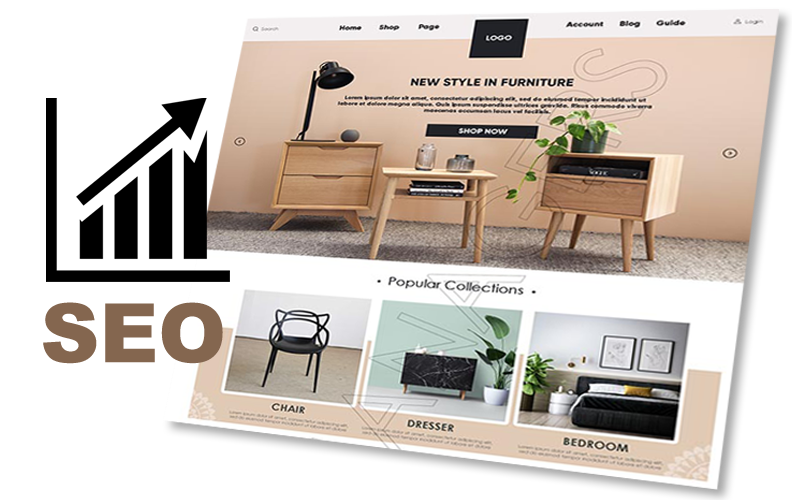
In the fast-paced world of eCommerce, competing with industry giants can feel like an impossible task, especially for small businesses. But one Sydney furniture shop found success by enlisting the help of a local SEO company. This partnership helped level the playing field, bringing in more traffic, increasing brand visibility, and, ultimately, boosting sales. Let’s dive into how this Sydney SEO company helped a small furniture business take on industry giants like IKEA and Harvey Norman.

Understanding the Competitive Landscape

When the furniture shop first approached the SEO company, the competition was fierce. Industry giants like IKEA and Fantastic Furniture dominated the market, making it hard for smaller players to get noticed online. These brands had large marketing budgets, vast product selections, and brand recognition that gave them an overwhelming advantage.

However, the Sydney SEO company recognised that the key to success was finding ways to stand out in search results. They understood that while the giants may dominate generic search terms, there was an opportunity to capitalise on niche keywords and local search optimisation.

The Initial SEO Audit: Identifying Opportunities

The SEO journey began with a thorough audit of the furniture shop’s website. The audit revealed several key areas where the shop was underperforming:

  1. Low search visibility – The shop’s website was not ranking for important keywords in the furniture industry, making it nearly invisible to potential customers.
  2. Weak local SEO – There was little optimisation for location-based searches, meaning the shop was missing out on valuable traffic from nearby customers.
  3. Slow website speed – The site took longer to load than competitors, leading to a high bounce rate and poor user experience.
  4. Non-optimised product pages – Product descriptions lacked depth and SEO-friendly content, limiting the shop’s ability to rank well for specific furniture types or styles.
  5. Minimal backlink profile – The shop had few backlinks from reputable sites, which affected its domain authority and trustworthiness in Google’s eyes.

By identifying these weaknesses, the Sydney SEO company developed a comprehensive strategy that focused on both short-term wins and long-term growth.

Building a Local SEO Strategy

One of the key components of the SEO campaign was improving the furniture shop’s local search presence. The Sydney SEO company knew that many potential customers were likely searching for furniture stores near them, and capturing this local traffic could significantly boost sales.

Here’s how they approached local SEO:

  • Google Business Profile optimisation: They claimed and optimised the shop’s Google Business Profile, ensuring accurate information, engaging photos, and updated business hours were visible to potential customers.
  • Local keywords: The team conducted keyword research to find high-value local search terms such as “Sydney furniture store,” “custom furniture Sydney,” and “handcrafted tables in Sydney.” These terms were integrated into the website content, meta tags, and product descriptions.
  • Local citations: They ensured the shop’s name, address, and phone number (NAP) were consistently listed across major business directories, such as Yellow Pages and True Local, improving the business’s local search visibility.
  • Customer reviews: Recognising the power of online reviews, the SEO company encouraged the furniture shop to collect and respond to customer reviews, which enhanced trustworthiness and boosted local search rankings.

These local SEO efforts paid off. Within a few months, the furniture shop started to rank on the first page of Google for several location-based keywords. As a result, the shop began to see more foot traffic from Sydney customers who discovered them online.

Enhancing User Experience: Speed and Mobile Optimisation

Another critical factor in the SEO strategy was improving the website’s user experience. The Sydney SEO company knew that if users had a frustrating experience on the site, it would result in lost sales and poor rankings.

To address this, the company:

  • Improved website speed: They optimised images, reduced the number of plugins, and improved the website’s coding structure. These changes led to faster page load times, which improved user experience and search engine rankings.
  • Mobile optimisation: With more customers shopping on their phones, it was essential that the website was mobile-friendly. The SEO team made sure that the site was responsive, with easy navigation and quick load times on mobile devices.
  • User-friendly navigation: The company restructured the website to make it easier for customers to find products and checkout. This included simplifying menus, adding search filters, and ensuring that product pages were clearly organised.

These changes not only improved the shop’s SEO performance but also led to a lower bounce rate, longer time spent on site, and an increase in online sales.

Content Marketing: Crafting an Engaging Brand Story

Content played a massive role in the SEO strategy. The Sydney SEO company knew that to compete with furniture giants, the shop needed a unique selling point (USP) and a compelling brand story that would resonate with customers. Rather than focusing on price (which the shop couldn’t compete with), the company focused on highlighting the craftsmanship, quality, and bespoke nature of the furniture.

They launched a content marketing campaign that included:

  • Blog posts: Articles about interior design trends, tips for choosing the right furniture for small spaces, and the benefits of custom-made furniture. These blogs helped the shop target long-tail keywords and establish themselves as experts in their niche.
  • Product guides: Detailed product descriptions that not only focused on SEO keywords but also highlighted the benefits and craftsmanship of each item. This helped improve rankings for specific furniture types, like “custom wood dining tables” or “handmade lounge chairs.”
  • Customer stories: Case studies and testimonials from satisfied customers were featured on the website, showcasing the unique, high-quality furniture pieces that the shop produced. These stories built trust and appealed to customers looking for something more personal than mass-produced furniture.
  • Video content: To capture a wider audience, the SEO team produced videos that showcased the furniture shop’s products, craftsmanship, and the story behind each piece. These videos were shared on social media and embedded into the website, further engaging potential customers.

By positioning the furniture shop as a boutique business that offered something special, the Sydney SEO company helped them carve out a niche in a crowded market.

Building Authority with Backlinks

One of the challenges facing the furniture shop was its lack of domain authority, which made it hard to rank against big players with established websites. The Sydney SEO company focused on building a strong backlink profile to improve the shop’s authority and boost its search rankings.

They implemented the following tactics:

  • Outreach to local bloggers and influencers: The SEO company reached out to Sydney-based bloggers, influencers, and interior design experts to feature the furniture shop in their content. By securing mentions and links from reputable local sites, they were able to improve the shop’s domain authority and drive referral traffic.
  • Guest posts: The team also wrote guest posts for interior design blogs, offering valuable content about home décor, furniture trends, and design tips. These posts not only earned backlinks but also helped establish the shop as a trusted source in the furniture industry.
  • Press coverage: They secured coverage in local media outlets, highlighting the shop’s unique furniture offerings and its commitment to sustainable practices. This further boosted brand awareness and provided high-quality backlinks that improved search rankings.

Monitoring and Ongoing Optimisation

SEO is not a one-time effort, and the Sydney SEO company knew that constant monitoring and optimisation were essential to maintaining and improving the furniture shop’s rankings. They set up analytics tracking to monitor key metrics such as organic traffic, keyword rankings, and conversion rates.

Using this data, they made ongoing adjustments to the SEO strategy, such as:

  • Keyword refinement: As new furniture styles and trends emerged, they updated the site’s content to target relevant keywords and maintain high rankings.
  • Content updates: They regularly refreshed old blog posts and product descriptions with new information and keywords to keep the content relevant and optimised for search engines.
  • Competitor analysis: The team continued to monitor the shop’s larger competitors, adjusting the strategy as needed to stay ahead in the rankings for niche and local search terms.

Results: Competing with the Giants

Within a year, the Sydney furniture shop saw a dramatic improvement in its online presence. The shop’s website was ranking on the first page of Google for numerous local and niche keywords, driving a significant increase in organic traffic. More importantly, this increase in traffic translated to more online and in-store sales.

The shop’s newfound visibility allowed them to compete with industry giants like IKEA on their own terms, by focusing on their unique value proposition: high-quality, custom-made furniture with a personal touch. Thanks to the targeted SEO strategy, the shop was no longer lost in the sea of competitors but stood out as a go-to destination for customers looking for something special.

Conclusion

The partnership between the Sydney SEO company and the furniture shop is a perfect example of how a well-executed SEO strategy can level the playing field, even when facing industry giants. By focusing on local SEO, enhancing the user experience, building a compelling brand story, and boosting domain authority, the SEO company helped the shop gain visibility, attract more customers, and compete in a highly competitive market.

For small businesses in Australia, this success story highlights the power of SEO in helping them not just survive but thrive in the digital age.


Social Media Strategy for Australian Healthcare: The Ultimate Guide with Insights, Examples, and More

Social Media Strategy

In the evolving landscape of healthcare, social media has emerged as a vital tool for engaging with patients, educating the public, and enhancing the reputation of healthcare providers. For Australian healthcare institutions, crafting a robust social media strategy is essential to navigate this digital frontier effectively. In this guide, we’ll explore actionable insights, real-world examples, and best practices to help you develop a winning social media strategy tailored to the Australian healthcare sector.

1. Understand Your Audience

Knowing your audience is the cornerstone of any successful social media strategy. In Australian healthcare, this means identifying the unique needs and preferences of your patient demographics. Are you targeting young families, seniors, or individuals with chronic conditions? Each group has distinct expectations and behaviours on social media platforms.

For example, young families may engage more on Instagram or Facebook, looking for health tips and paediatric advice, while seniors might prefer informative content on Facebook. Tailor your content to these specific audiences to maximise engagement.

2. Choose the Right Platforms

Different social media platforms serve different purposes, and not all may be suitable for your healthcare organisation. In Australia, Facebook remains a dominant platform, especially among older demographics, while Instagram is popular with younger users. LinkedIn is ideal for B2B interactions, such as networking with other healthcare professionals or institutions.

For instance, a Melbourne-based hospital might use Facebook to share patient success stories and community health initiatives, while a specialist clinic in Sydney could use LinkedIn to connect with other healthcare providers and share industry insights.

3. Create Valuable and Relevant Content

Content is the heart of your social media strategy. In healthcare, content should be informative, trustworthy, and sensitive to the needs of your audience. Share health tips, patient testimonials, updates on medical research, and behind-the-scenes looks at your healthcare facility.

An example of valuable content could be a Brisbane clinic posting regular updates on flu vaccinations, or a Sydney-based mental health service sharing articles on coping strategies during stressful times. By offering content that addresses the immediate concerns of your audience, you position your brand as a trusted source of information.

4. Engage with Your Community

Engagement is key to building a strong online community. Respond to comments, answer questions, and participate in conversations. This interaction helps build trust and fosters a sense of community around your brand.

For instance, a Perth-based dental clinic could run a Q&A session on Facebook Live, allowing patients to ask questions in real-time. This not only provides immediate value to your audience but also humanises your brand, making it more relatable and approachable.

5. Leverage User-Generated Content

User-generated content (UGC) can be a powerful tool in your social media strategy. Encourage patients to share their experiences with your healthcare services and feature their stories on your platforms. This not only provides social proof but also creates a sense of community and loyalty among your followers.

For example, a hospital in Adelaide might invite patients to share their recovery stories or photos after surgery, which can then be shared (with consent) on the hospital’s social media pages. This kind of content resonates deeply because it’s authentic and relatable.

6. Monitor and Adapt Your Strategy

Social media trends and algorithms are constantly changing, so it’s essential to monitor the performance of your content and adapt your strategy accordingly. Use analytics tools to track engagement, reach, and other key metrics. If a particular type of post is performing well, consider creating more of that content.

For example, if a Queensland health service notices that their mental health posts on Instagram receive high engagement, they might focus more on creating similar content, or even develop a campaign around mental health awareness.

7. Ensure Compliance with Australian Healthcare Regulations

Healthcare is a highly regulated industry, and it’s crucial to ensure that your social media content complies with Australian healthcare laws and guidelines. This includes protecting patient privacy, avoiding misleading information, and ensuring that all claims are evidence-based.

For example, a Sydney-based cosmetic clinic must be cautious not to post before-and-after photos without proper consent and should ensure that any medical claims made on social media are backed by clinical evidence.

8. Collaborate with Influencers and Experts

Partnering with healthcare influencers or experts can amplify your reach and credibility. In Australia, there are numerous health professionals, wellness experts, and patient advocates who have significant followings on social media. Collaborating with these influencers can help you tap into their audience and expand your reach.

For instance, a Melbourne-based wellness centre could partner with a local fitness influencer to promote their services or a Brisbane hospital might collaborate with a well-known dietitian to share nutritional advice during National Nutrition Week.

9. Crisis Management: Be Prepared

In the healthcare sector, it’s crucial to have a crisis management plan in place for your social media channels. Whether it’s dealing with a public health issue or responding to negative feedback, being prepared can help mitigate the impact of a crisis.

For example, during the COVID-19 pandemic, many Australian healthcare providers had to quickly adapt their communication strategies to provide timely updates and accurate information. Having a clear, well-communicated crisis management plan ensured that they could respond effectively and maintain public trust.

Conclusion

A well-crafted social media strategy can be a powerful tool for Australian healthcare providers. By understanding your audience, creating valuable content, engaging with your community, and staying compliant with regulations, you can build a strong online presence that enhances your brand and fosters trust among patients. With the right approach, social media can become an integral part of your healthcare marketing strategy, helping you connect with your audience in meaningful and impactful ways.

Identifying Keyword Cannibalization Using OpenAI’s Text Embeddings

Using OpenAI’s Text Embeddings

In the ever-evolving landscape of search engine optimization (SEO), maintaining a robust online presence requires constant vigilance and adaptation. One common yet often overlooked issue in SEO is keyword cannibalization. This occurs when multiple pages on a website target the same or similar keywords, leading to internal competition and potentially diluting the website’s overall ranking potential. Traditional methods of identifying keyword cannibalization involve manual analysis and the use of SEO tools, but recent advancements in natural language processing (NLP) offer a more sophisticated approach. This blog explores how OpenAI’s text embeddings can be leveraged to identify and mitigate keyword cannibalization, with a focus on applications relevant to Australian businesses.

Understanding Keyword Cannibalization

Keyword cannibalization happens when two or more pages from the same website compete for the same keyword, confusing search engines about which page to prioritise. This can lead to several issues:

  • Reduced Ranking Potential: Instead of one strong page, you have several mediocre ones.
  • Confused Search Engines: Search engines struggle to determine which page is more relevant.
  • Wasted Crawl Budget: Search engines may waste resources crawling multiple similar pages.

For instance, if a Melbourne-based e-commerce site sells eco-friendly products and has multiple pages targeting “sustainable shopping Melbourne,” it might experience keyword cannibalization. Instead of one authoritative page, the site might have several less impactful pages.

The Power of Text Embeddings

Text embeddings are a type of representation where words, phrases, or even entire documents are mapped to vectors of real numbers. These vectors capture semantic meaning, enabling more nuanced analysis of textual content. OpenAI’s text embeddings, in particular, have been trained on vast datasets, allowing them to understand and represent complex language patterns.

By leveraging text embeddings, we can move beyond simple keyword matching to a deeper analysis of content similarity. This approach can help in identifying keyword cannibalization by assessing the semantic similarity between pages.

How OpenAI’s Text Embeddings Work

OpenAI’s text embeddings convert textual data into high-dimensional vectors. Here’s a simplified breakdown:

  1. Input Text: A piece of text is inputted into the embedding model.
  2. Encoding: The text is encoded into a numerical vector.
  3. Vector Comparison: Vectors from different texts can be compared to assess similarity.

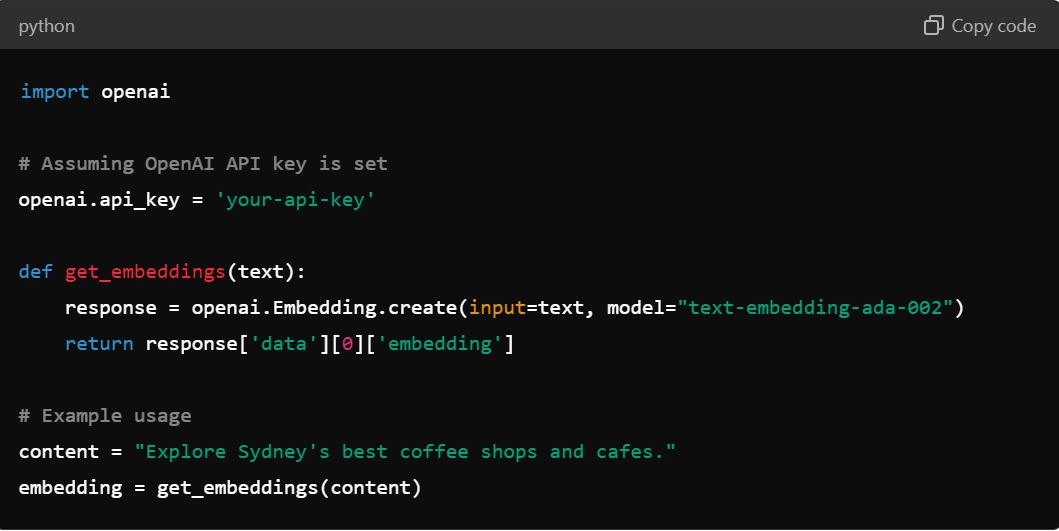
For example, two blog posts about “Sydney’s best coffee shops” might use different wording but convey similar content. Text embeddings can quantify this similarity, making it easier to identify cannibalization issues.

Implementing Text Embeddings for Keyword Cannibalization

Step 1: Collect Data

Gather all the content from your website, including blog posts, product pages, and landing pages. For an Australian business, this might involve extracting data from various categories such as tourism, e-commerce, and local services.

Step 2: Generate Embeddings

Use OpenAI’s API to generate embeddings for each piece of content. This involves sending the text data to the API and receiving the corresponding vector representations.

Step 3: Calculate Similarity

Calculate the cosine similarity between vectors to determine how closely related the content pieces are. Cosine similarity ranges from -1 to 1, with 1 indicating identical content and 0 indicating no similarity.

Step 4: Identify Cannibalization

Set a threshold for similarity. Content pairs exceeding this threshold can be flagged for potential cannibalization. For example, a threshold of 0.8 might indicate significant overlap.

Step 5: Take Action

Once cannibalization is identified, take steps to consolidate or differentiate the content. This might involve merging similar pages, creating more distinct content, or optimising internal linking structures.

Case Study: An Australian Travel Blog

Consider an Australian travel blog with sections on Sydney, Melbourne, and Brisbane. By using OpenAI’s text embeddings, the blog owners can identify overlapping content about “top tourist attractions” in each city. Here’s a hypothetical scenario:

  1. Data Collection: Gather content from blog posts on Sydney, Melbourne, and Brisbane.
  2. Generate Embeddings: Create embeddings for each post.
  3. Calculate Similarity: Compare embeddings to identify similarities.
  4. Identify Cannibalization: Flag posts with high similarity scores.
  5. Take Action: Merge or differentiate content to improve SEO.

Benefits of Using Text Embeddings

Enhanced Precision

Unlike traditional keyword analysis, text embeddings consider the context and meaning of content, leading to more accurate identification of cannibalization.

Scalability

Text embeddings can handle large volumes of data, making them suitable for websites with extensive content.

Insightful Analysis

By understanding semantic similarities, businesses can gain deeper insights into their content strategy and make more informed decisions.

Challenges and Considerations

Computational Resources

Generating and comparing embeddings can be computationally intensive, requiring significant processing power.

Threshold Setting

Determining the appropriate similarity threshold requires experimentation and may vary based on the specific context.

Continuous Monitoring

Keyword cannibalization is not a one-time issue. Continuous monitoring and adjustment are necessary to maintain optimal SEO performance.

Conclusion

Identifying keyword cannibalization is crucial for maintaining a strong SEO strategy. OpenAI’s text embeddings offer a powerful tool for detecting and addressing this issue, providing a more nuanced and scalable solution compared to traditional methods. By leveraging these advanced NLP techniques, Australian businesses can optimise their content, enhance their online presence, and ultimately achieve better search engine rankings.

For businesses looking to stay ahead in the competitive digital landscape, adopting innovative technologies like text embeddings is not just an option but a necessity. Embrace this advanced approach to SEO and ensure your content strategy is as robust and effective as possible.

Master Your Outreach: Streamlined Social Media Management Features

Master Your Outreach: Streamlined Social Media Management Features

In today’s digital age, social media has become a cornerstone of marketing and communication strategies. Businesses, from small startups to multinational corporations, leverage social media platforms to connect with their audience, promote their products or services, and build their brand. However, managing multiple social media accounts efficiently can be challenging. This is where streamlined social media management features come into play, offering tools and functionalities to simplify and enhance your outreach efforts. In this blog post, we will explore various social media management features that can help you master your outreach.


1. Centralised Dashboard

A centralised dashboard is the heart of any effective social media management tool. It allows you to manage all your social media accounts from a single interface. This feature saves time and reduces the complexity of switching between different platforms. With a centralised dashboard, you can schedule posts, monitor engagement, and analyse performance across multiple social networks, including Facebook, Twitter, Instagram, LinkedIn, and more.

Benefits:

  • Efficiency: Streamlines the process of managing multiple accounts.
  • Consistency: Ensures a consistent brand voice across different platforms.
  • Time-saving: Reduces the time spent switching between accounts.


2. Content Scheduling

One of the most powerful features of social media management tools is content scheduling. This feature allows you to plan and schedule your posts in advance. You can create a content calendar, ensuring that your social media presence remains active even during off-hours or holidays. Scheduling posts in advance also allows for better planning and coordination of your marketing campaigns.

Benefits:

  • Consistency: Maintains a steady flow of content.
  • Flexibility: Enables posting during peak engagement times.
  • Planning: Helps in organising and executing marketing campaigns effectively.

3. Analytics and Reporting

Analytics and reporting features provide insights into the performance of your social media activities. These tools offer metrics such as engagement rates, reach, impressions, click-through rates, and more. By analysing these metrics, you can gauge the effectiveness of your content, understand your audience better, and make data-driven decisions to improve your social media strategy.

Benefits:

  • Insightful: Offers valuable data to inform your strategy.
  • Measurable: Tracks the success of campaigns and posts.
  • Data-driven: Facilitates informed decision-making.

4. Social Listening

Social listening involves monitoring social media channels for mentions of your brand, competitors, or relevant keywords. This feature helps you stay informed about what is being said about your brand and industry. Social listening tools can provide real-time alerts, allowing you to respond promptly to both positive and negative mentions.

Benefits:

  • Awareness: Keeps you informed about brand perception.
  • Engagement: Enables timely responses to customer feedback.
  • Competitive Insight: Provides information about competitors and industry trends.

5. Engagement Tools

Engagement tools are designed to help you interact with your audience more effectively. These features include responding to comments and messages, liking and sharing posts, and engaging with followers. Some tools also offer automated responses, which can be useful for handling common queries or directing users to relevant resources.

Benefits:

  • Responsive: Enhances your ability to respond quickly to audience interactions.
  • Interactive: Fosters a stronger connection with your audience.
  • Efficiency: Saves time with automated responses for common inquiries.

6. Collaboration Features

For teams managing social media accounts, collaboration features are essential. These tools enable multiple users to work together seamlessly. You can assign tasks, approve content, and manage user permissions, ensuring that everyone is on the same page and contributing effectively to the social media strategy.

Benefits:

  • Coordination: Facilitates teamwork and collaboration.
  • Oversight: Ensures content approval processes are followed.
  • Efficiency: Streamlines task management and workflow.

7. Content Curation

Content curation tools help you find and share relevant content from around the web. By curating content, you can provide value to your audience and position your brand as a thought leader in your industry. These tools often include features like RSS feeds, content suggestions, and the ability to schedule curated content alongside your original posts.

Benefits:

  • Value-add: Enhances the value of your social media content.
  • Authority: Positions your brand as a knowledgeable industry leader.
  • Engagement: Keeps your audience engaged with diverse content.

8. Audience Segmentation

Understanding your audience is key to effective social media marketing. Audience segmentation tools allow you to categorize your followers based on various criteria such as demographics, interests, and behaviors. This segmentation enables you to tailor your content and campaigns to different audience groups, increasing relevance and engagement.

Benefits:

  • Personalization: Delivers more relevant content to different audience segments.
  • Targeting: Improves the effectiveness of marketing campaigns.
  • Insightful: Provides deeper understanding of audience demographics and preferences.

9. Integration with Other Tools

Social media management tools often integrate with other marketing and business tools such as CRM systems, email marketing platforms, and analytics software. These integrations enable seamless data flow and provide a more comprehensive view of your marketing efforts. By integrating your social media management tool with other systems, you can streamline workflows and enhance overall efficiency.

Benefits:

  • Comprehensive: Provides a holistic view of marketing efforts.
  • Streamlined: Enhances workflow efficiency through seamless data integration.
  • Insightful: Offers deeper insights by combining data from multiple sources.

10. Mobile Access

In a world where mobility is essential, having access to your social media management tool on mobile devices is crucial. Mobile access ensures that you can manage your social media accounts, schedule posts, and respond to engagement on the go. This feature is particularly useful for businesses that require real-time social media management, such as events or live updates.

Benefits:

  • Flexibility: Allows management of social media accounts from anywhere.
  • Real-time: Enables immediate responses and updates.
  • Convenience: Facilitates social media management on the go.

Conclusion

Mastering your social media outreach requires the right set of tools and features. A robust social media management tool with a centralised dashboard, content scheduling, analytics, social listening, engagement tools, collaboration features, content curation, audience segmentation, integrations, and mobile access can significantly enhance your efficiency and effectiveness. By leveraging these features, you can streamline your social media efforts, engage more effectively with your audience, and achieve your marketing goals.

As the digital landscape continues to evolve, staying ahead with advanced social media management features will be essential for businesses aiming to maintain a strong online presence. Invest in a comprehensive social media management tool and unlock the potential to master your outreach, drive engagement, and grow your brand in the competitive world of social media.


Boost Your B2B SaaS with Specialist Link Building Strategies

From Engagement to Conversion: Maximising Impact in Social Media Management

Engagement to Conversion google ai

Discover the strategies and best practices that transform social media engagement into measurable business conversions. Learn how to effectively manage your social media presence to drive results and achieve your marketing goals.

Understanding Social Media Engagement

In the realm of social media, engagement is the cornerstone of building a strong online presence. Engagement encompasses all interactions users have with your content, including likes, shares, comments, and clicks. High engagement indicates that your content resonates with your audience, fostering a community around your brand. Understanding the nuances of engagement helps in crafting strategies that not only capture attention but also sustain it.

Engagement serves as a metric of success in social media management, revealing insights into audience preferences and behaviour. By analysing these interactions, you can identify what types of content are most effective, the optimal times for posting, and which platforms are most conducive to your goals.

Strategies for Converting Engagement to Conversions

While engagement is vital, the ultimate goal of social media efforts is to drive conversions—turning followers into customers. Converting engagement into conversions requires a strategic approach that seamlessly guides users through the customer journey.

  1. Clear Call-to-Actions (CTAs): Every piece of content should include a clear and compelling CTA, directing users towards the desired action, whether it’s visiting your website, signing up for a newsletter, or making a purchase.
  2. Value-Driven Content: Offer valuable content that addresses the needs and pain points of your audience. Educational posts, how-to guides, and exclusive promotions can incentivize users to take the next step.
  3. Personalization: Tailor your messaging to different segments of your audience. Personalised content makes users feel valued and understood, increasing the likelihood of conversion.

Effective Social Media Management Techniques

Managing social media effectively involves a combination of strategic planning, creative content, and analytical evaluation. Here are some key techniques to enhance your social media management:

Analysing Audience Behaviour

Understanding your audience is critical to crafting effective social media strategies. Utilise tools like social media analytics to gain insights into demographics, interests, and behaviours. This information helps in creating targeted campaigns that resonate with your audience’s preferences.

  • Demographic Analysis: Identify the age, gender, location, and interests of your audience to tailor content accordingly.
  • Behavioural Insights: Monitor how your audience interacts with your content and at what times they are most active.

Creating Compelling Content

Content is king in the social media landscape. To capture and maintain your audience’s attention, your content must be engaging, relevant, and valuable.

  • Visual Appeal: Use high-quality images, videos, and graphics to make your posts visually appealing.
  • Storytelling: Craft compelling narratives that connect emotionally with your audience.
  • Consistency: Maintain a consistent posting schedule to keep your audience engaged and anticipate new content.

Leveraging Analytics for Improvement

Analytics provide a wealth of information that can be used to refine your social media strategy. By regularly reviewing your performance metrics, you can identify what works and what doesn’t, allowing for continuous improvement.

  • Performance Metrics: Track key metrics such as engagement rate, reach, and conversion rate to evaluate your content’s effectiveness.
  • A/B Testing: Experiment with different types of content and posting times to see what yields the best results.

Tools for Social Media Management

Effective social media management often requires the use of specialised tools that streamline and enhance your efforts.

  • Scheduling Tools: Platforms like Hootsuite and Buffer allow you to schedule posts in advance, ensuring consistent posting without manual intervention.
  • Analytics Tools: Tools like Google Analytics and Sprout Social provide in-depth insights into your social media performance.
  • Content Creation Tools: Canva and Adobe Spark enable you to create visually appealing graphics and videos easily.

By leveraging the power of social media, businesses can not only enhance their brand visibility but also create lasting relationships with their customers, ultimately leading to increased sales and loyalty. Whether you’re a startup or an established company, mastering the art of social media management is crucial in today’s competitive market.


The Power of Partnerships in Nonprofit Social Media Management

The Fundamentals of Social Media Management: Examples and Essential Tools

The Fundamentals of Social Media Management

In today’s digital age, social media management has become indispensable for businesses and individuals alike. With the right strategies and tools, you can effectively engage your audience, build brand presence, and drive conversions. Let’s delve into the fundamentals of social media management, exploring key examples and essential tools that can elevate your online presence.

Understanding Social Media Management

Social media management involves creating, scheduling, analysing, and engaging with content posted on various social media platforms such as Facebook, Twitter, Instagram, LinkedIn, and more. It encompasses both organic and paid strategies aimed at reaching and connecting with your target audience.

Examples of Effective Social Media Management

  1. Nike – excels in social media management by leveraging compelling visuals and engaging      storytelling. They consistently share user-generated content, showcase their products in        action, and promote inspiring athlete stories. Nike’s social media presence fosters a sense of community among its followers, driving brand loyalty and advocacy.


    View this post on Instagram


    A post shared by Nike (@nike)

  2.  Wendy’s – Known for its witty and humorous persona on Twitter, Wendy’s demonstrates the power of personality-driven engagement. Their timely responses, clever memes, and playful banter with followers have earned them a devoted fan base and widespread attention, showcasing how brands can humanise their online presence.

  3. Airbnb – employs user-generated content effectively to showcase unique accommodations and travel experiences. Through stunning photos and immersive videos shared by hosts and guests, Airbnb fosters authenticity and trust, inspiring wanderlust and driving bookings.

Essential Tools for Social Media Management

  1. Buffer – a versatile social media management platform that allows you to schedule posts, analyse performance metrics, and engage with your audience across multiple platforms from a single dashboard. Its intuitive interface and robust scheduling features make it a favourite among marketers.
  2. Hootsuite – offers comprehensive social media management solutions, including scheduling, monitoring, and analytics. It enables teams to collaborate effectively, streamline workflows, and track key performance indicators to optimise their social media strategy.
  3. Canva – a user-friendly graphic design tool that empowers users to create stunning visuals for their social media posts. With its vast library of templates, fonts, and graphics, Canva makes it easy to design eye-catching graphics and maintain brand consistency across platforms.
  4. Google Analytics – While primarily known for website analytics, Google Analytics also provides valuable insights into social media referral traffic, audience demographics, and user behaviour. By tracking conversions and engagement metrics, you can refine your social media strategy and maximise ROI.
  5. Sprout Social – offers a suite of social media management and analytics tools designed to help businesses grow their online presence. From publishing and scheduling to monitoring and reporting, Sprout Social provides actionable insights to optimise your social media campaigns.

In conclusion mastering social media management requires a combination of creativity, strategy, and the right tools. By studying examples of successful brands and leveraging essential tools like Buffer, Hootsuite, Canva, Google Analytics, and Sprout Social, you can enhance your online presence, engage your audience effectively, and achieve your business objectives. Embrace the power of social media management to connect with your audience, foster brand loyalty, and drive meaningful results.


Best Perth Social Media Influencers & Leaders: Who’s Who in WA?

Best Perth Social Media Influencers & Leaders

In the digital age, social media has become a powerful platform for individuals to express themselves, share their passions, and connect with others. Perth, the capital city of Western Australia, is home to a vibrant community of social media influencers and leaders who have made a significant impact in their respective fields. In this article, we will delve into the profiles of some of the best Perth social media influencers and leaders, highlighting their achievements and contributions to the online world.


  1. Sarah Wilson

Sarah Wilson is a renowned author, journalist, and entrepreneur who has gained a massive following through her social media platforms. With a focus on health, wellness, and sustainability, Sarah has used her influence to promote a balanced and mindful lifestyle. Her best-selling books, including “I Quit Sugar,” have inspired thousands to adopt healthier habits. Sarah’s engaging content and authentic approach have made her a trusted voice in the wellness community.


View this post on Instagram


A post shared by Sarah Wilson (@_sarahwilson_)

  1. Matt Hale 

Matt Hale is a talented hypnotist and comedian who has captivated audiences both on stage and online. With his unique blend of humour and hypnosis, Matt has amassed a loyal following on social media. His entertaining videos and live performances have made him a popular figure in the entertainment industry. Matt’s ability to engage and entertain through social media has solidified his position as one of Perth’s top influencers.

  1. Rebecca Sullivan

Rebecca Sullivan is a sustainable living advocate and author who uses her social media platforms to inspire others to live a more eco-friendly lifestyle. Through her posts and stories, Rebecca shares practical tips on reducing waste, growing your own food, and embracing sustainable practices. Her passion for the environment and dedication to making a positive impact have earned her a dedicated following and recognition as a leader in the sustainability movement.

  1. Tim Ross 

Tim Ross is an architect and design enthusiast who showcases the beauty of Perth’s modernist architecture through his social media channels. With a keen eye for detail and a passion for preserving architectural heritage, Tim has become a go-to source for all things modernist in Perth. His stunning photography and informative captions provide a glimpse into the city’s architectural gems, earning him a well-deserved spot among Perth’s social media influencers.


View this post on Instagram


A post shared by Tim Ross. (@modernister)

  1. Jessica Williamson

Jessica Williamson is a beauty and lifestyle influencer who has made a name for herself through her popular blog and social media platforms. With a focus on clean beauty and self-care, Jessica shares her expertise and recommendations with her engaged audience. Her honest product reviews and relatable content have established her as a trusted source for beauty enthusiasts in Perth and beyond.

  1. Max Veenhuyzen 

Max Veenhuyzen is a food and travel writer who has successfully transitioned into the world of social media. Through his Instagram account, Max shares his culinary adventures and recommendations, showcasing Perth’s vibrant food scene. His visually appealing food photography and insightful captions have earned him a loyal following and recognition as one of Perth’s top food influencers.


View this post on Instagram


A post shared by Max Veenhuyzen (@maxveenhuyzen)

  1. Emma Pegrum

Emma Pegrum is a fashion and lifestyle blogger who has gained popularity through her stylish outfits and relatable content. With a focus on sustainable fashion and body positivity, Emma encourages her followers to embrace their individuality and make conscious fashion choices. Her authentic approach and fashion-forward posts have positioned her as a leading influencer in Perth’s fashion scene.


View this post on Instagram


A post shared by Emma Pegrum (@emmapegrum)

Bottom Line

Perth is home to a diverse and talented community of social media influencers and leaders who have made a significant impact in their respective fields. From wellness advocates to architects, food enthusiasts to fashion bloggers, these individuals have used their platforms to inspire, educate, and entertain their followers. Through their engaging content and authentic approach, they have become trusted voices in their communities. By highlighting the profiles of these best Perth social media influencers and leaders, we hope to shed light on their achievements and contributions to the online world.

Unveiling Sydney Social Media Marketing Agency in Australia: Elevating Your Online Presence

Unveiling Sydney Social Media

In the bustling digital sphere, social media has become the cornerstone of brand visibility and engagement. For businesses in Australia aiming to thrive online, partnering with a top-notch social media marketing agency in Australia is pivotal. This guide unveils the epitome of social media expertise, helping you discover a partner that doesn’t just run campaigns, but crafts compelling narratives and fosters meaningful connections.

Understanding the Power of Social Media Marketing

Social media marketing transcends mere posts and likes; it’s a strategic blend of creativity, data analysis, and audience understanding. From Facebook and Instagram to Twitter and LinkedIn, each platform offers unique opportunities for businesses. A proficient social media marketing agency harnesses these platforms, strategically leveraging their potential for brand growth and customer engagement.

Qualities of the Best Social Media Marketing Agency

  • Creativity and Innovation: Captivating Content: Exceptional agencies create content that resonates with the audience, employing visuals, videos, and interactive elements to captivate attention.
  • Innovative Campaigns: They go beyond conventional strategies, crafting innovative campaigns that spark conversations and drive organic reach.
  • Audience Insight and Analysis: Targeted Approach: Understanding the target audience is paramount. Top agencies conduct in-depth audience analysis, tailoring campaigns to specific demographics, interests, and behaviours.
  • Data-Driven Decisions: Utilising advanced analytics, they analyse user behaviour, engagement patterns, and campaign performance, making data-driven decisions for continuous improvement.
  • Engaging Community Management: Prompt Responses: Effective community management involves timely responses to comments, messages, and reviews, fostering a positive online environment. Crisis Management: Prepared for any situation, they handle negative feedback and crises professionally, safeguarding your brand reputation.
  • ROI-Focused Strategies: Goal-Oriented Campaigns Their strategies align with your business objectives, whether it’s increasing website traffic, boosting sales, or enhancing brand awareness.
  • Performance Tracking: Robust tracking mechanisms measure campaign effectiveness, ensuring your investment translates into tangible results.

Choosing Your Ideal Social Media Marketing Partner in Australia

Selecting the right social media marketing agency demands careful consideration. Here’s a structured approach to guide your decision-making process:

  • Define Your Goals Clarify Objectives: Define your social media goals. Whether it’s brand awareness, lead generation, or customer engagement, clear objectives guide your partnership.
  • Research and Evaluate Explore Portfolios: Scrutinise agency portfolios, examining their past campaigns. Look for creativity, engagement, and diversity in their work.
  • Client Testimonials: Client testimonials offer insights into their professionalism, reliability, and client satisfaction levels.
  • Assess Communication and Transparency: Transparent communication is key. Ensure the agency explains their strategies clearly, detailing their planned approach and expected outcomes.
  • Reporting Structure: Regular, comprehensive reports detailing campaign performance, expenses, and ROI are crucial for evaluating the agency’s effectiveness.
  • Consider Experience and Expertise Industry Expertise: Familiarity with your industry nuances is advantageous. Look for agencies with experience in your sector.
  • Creative Talent: Assess the team’s creative talents, ensuring they can craft compelling narratives that align with your brand identity.

FAQs: Addressing Common Queries about Social Media Marketing

  • Which social media platforms are best for business marketing?

Top platforms include Facebook, Instagram, Twitter, LinkedIn, and YouTube. The choice depends on your target audience and business objectives.

  • How often should businesses post on social media?

Consistency matters more than frequency. Regular, engaging posts maintain audience interest. Posting schedules depend on the platform and audience activity patterns.

  • Can social media marketing drive direct sales?

Yes, strategic campaigns can drive direct sales through targeted advertisements, promotions, and engaging content that encourages immediate action.

  • How long does it take to see results from social media marketing campaigns?

Results vary based on goals and strategies. While engagement can start quickly, significant impact, such as increased sales, may take a few months of consistent efforts.

  • Is social media marketing suitable for all business sizes?

Absolutely. Social media marketing can be tailored for businesses of all sizes. Small businesses benefit from local engagement, while larger enterprises can expand their global reach.

Wrap-up

In the dynamic realm of social media, choosing the right social media marketing agency in Australia is transformative. It’s not just about posting content; it’s about creating a digital personality, fostering genuine connections, and inspiring action. By understanding the essence of social media marketing, recognising the qualities of top agencies, and adopting a systematic approach to selection, you can elevate your brand’s online presence effectively.

Remember, the best social media marketing agency isn’t just a service provider; they are your brand architects, your online storytellers, and your customer engagement champions. Invest wisely, collaborate strategically, and witness your brand flourish in the digital landscape. Your social media success story begins with the right agency — one that understands your goals and crafts narratives that resonate with your audience. Seize the opportunity and let your brand’s story unfold in the captivating language of social media.


Top 10 Social Media Influencers in The Philippines

Top 10 Social Media Influencers in The Philippines

Filipinos are a truly creative bunch and have an undeniable talent that has captured the attention of audiences in America, and Asia. It’s clear that digital marketing and social media marketing, like Facebook, Instagram, YouTube, and Tiktok, just like other social media platforms, have a reputation for being superficial. Admittedly, it could be that way if you don’t know how to leverage it. 

That said, improving your social media platform feeds is up to you. One of the best ways to break free from the superficiality of social media is to follow influencers that are considered the best in their fields. After all, if you follow content creators that have substance, the knowledge and resources they share will have a direct impact on your life.

So, here are the Top 10 social media influencers in the Philippines that genuinely inspire and provide value to their audience.


1. Willie Ong

A health professional with over 16 million followers, it’s safe to say Willie Ong is one of the most beloved doctors in the Philippines.

This cardiologist and internist rose to fame after giving medical advice through his YouTube channel and Facebook page. However, his career as a celebrity influencer didn’t start there. Even before he became a social media superstar, he produced his own TV show and appeared in Salamat Dok, a program by ABS-CBN. He also wrote for various publications including Philippine Star. Dr. Ong also tried his luck in politics when he ran for the senate in 2019 and vice presidency in 2022. 

2. Chinkee Tan

A finance, and business professional when it comes to wealth coaching in the Philippines, Chinkee Tan is the ultimate influencer to follow. This motivational speaker and financial consultant has published 14 best-selling books. He also hosts his own radio program. 

Although Chinkee Tan’s main platform is his personal website, and Facebook page is a heavy favorite among his 5.2 million followers.

On his Facebook page, he posts not only tips and tricks to build more wealth, but also funny anecdotes, and money-saving challenges. 

3. Dr. Vicky Belo

A health expert dermatologist professional with 1.29M YouTube subscribers, Dr. Vicky Belo is not just any ordinary dermatologist; she’s the go-to skin expert for some of the biggest celebrities and models in the Philippines. But that’s not all she’s also a TV personality and social media sensation! Dr. Belo loves to share about her luxurious lifestyle and her family on social media. 

She’s known for buying expensive designer pieces and taking VIP tours at designer boutiques. And if you follow her on TikTok, you’ll see her answering medical queries and posting mini vlogs. Whether you’re looking for skincare tips or just want to see how the other half lives, Dr. Vicky Belo is one influencer you don’t want to miss!

4. Bryan Yambao

An ultimate Filipino celebrity fashion and style blogger, and socialite with 4.2M TikTok followers.

Bryanboy, or Brian Yambao, won the 2007 Philippine Blog Award for Best Fashion & Lifestyle Blog, and his fame only continues to grow. He’s now creating short-form videos on TikTok and sharing his luxury lifestyle with his followers.

On his account, you’ll find product unboxings, his luxurious travels, his designer clothes, bags, and accessories, and his tips for attaining high social status. You won’t want to miss out on this style icon!

5. Heart Evangelista

An actress, and entrepreneur with 11.3M Instagram followers, Heart Evangelista is a total boss babe! socialite, basically a woman of many talents. Recently, Heart has been gaining international recognition for her jaw-dropping and stunning outfits during Paris Fashion Week.

She’s been rubbing shoulders with big names in the luxury fashion industry, like Edward Enninful, Anna Wintour, and Coisy Eloïse. Can you say goals?!

But that’s not all; on her Instagram account, Heart shares her most iconic outfits worn both nationally and internationally. Her fashion sense is truly impeccable, and she knows how to make a statement wherever she goes. And if you head over to her YouTube account, you’ll get an even more in-depth look into her glamorous lifestyle.

6. Liz Uy

A fashion stylist, and entrepreneur with 1.8M Instagram followers Liz Uy, an Instagram influencer who’s always in the know. 

From edgy concepts and celebrity styles to her own stunning OOTDs and her favorite luxury brands like Gucci, Versace, and Bvlgari, Liz is a true fashion icon in the Philippines. And with her keen eye for style and impeccable taste, she’s sure to leave you feeling inspired and chic.

7. Team Kramer 

A social media family influencer with 11M Facebook followers, and may be the most adored family in the Philippines at the moment. Team Kramer is composed of Chesca, Doug, Kendra, Scarlett, and Gavin Kramer. Chesca is a famous TV personality, who is now more known as a family and parenting social media influencer. Doug, on the other hand, was a basketball player turned family man.

On their social media account like the Facebook page and YouTube channel, Team Kramer usually shares about their family trips in and out of the Philippines. They also share their milestones, like purchasing their first and second home. The family members’ individual social media accounts are also popular, amounting to millions of followers overall.

8. Candy Pangilinan 

A TV actress and host with 1.27M YouTube subscribers Candy is a single mother to Quentin, who was diagnosed with ADHD and autism. Through her YouTube channel, Candy aims to spread awareness and understanding of children with disabilities.

She shares her personal journey of raising her son, including the difficulties she’s faced and how she’s overcome them. Plus, you’ll get to witness Quentin’s incredible milestones, like his haircut and his experience with cooking.

With her down-to-earth personality and inspirational videos, Candy has become a role model for many.

9. Alodia Gosiengfiao 

A popular cosplayer, model, and social media personality with 8.1M Facebook followers, Alodia is a true icon in the world of gaming and content creation. 

She is known for being the Senpai Alodia of the Philippines and has a wide-ranging social media outreach. She is prevalent on most social media sites like Facebook and YouTube, gaining more than a million subscribers and millions of views.

She has also done multiple collaborations with other vloggers and was awarded for it (Silver and Gold Play Button) one of the OG gaming and cosplay influencers in the Philippines set up a talent management company and co-founded Tier One Entertainment.

10. Alejandro Ilagan Atienza

A weather anchor, television host, and actor, with 1.4M Facebook followers, he is known professionally as Kim Atienza or Kuya Kim for a multihyphenate television personality, Kuya Kim Atienza has become one of social media influencer and the nation’s most famous dispensers of facts and forecasts.

Maybe in an alternate timeline, Kim Atienza is now a prominent figure in Philippine national politics. He is, after all, the son of former Manila Mayor Lito Atienza, and was once poised to follow in his father’s footsteps.

He was urged by his father to run for mayor. He declined, however, and instead chose to continue what had already been a successful career in broadcasting.

Online Advertising Empathy Guide in 2023

Online Advertising Empathy Guide in 2023

In trying circumstances, it’s important to employ empathy in advertising at the appropriate time and place to elicit the desired response from clients, media owners, and agencies as well as consumers.


The etymology of the word “empathy” is “in feeling.”


This idea is not novel to us as advertising. Finding or even generating a shared empathy is essential to advertising’s core goal of matching our clients’ brands and products with their potential customers. Although empathy has always been the foundation of connection development, even before the Ancient Greeks came up with a single word to define it, it has never been more crucial than it will be this year.

Although the most recent data indicate that Australia’s economy narrowly avoided entering a recession at the end of 2022, many analysts believe it is only a matter of time until it does. This recession will have an impact on 2023 and beyond. Furthermore, apocalyptic headlines are depressing to read since they predict “the biggest collapse in living standards since records began.” Business-wise, Q1 yearly forecasting is still challenging, and budgets must work harder than ever to meet goals. Consumer purchasing power will decline because people would have to prioritise their expenses and make concessions on non-essentials. All in all, it will be a challenging year for everyone.

People seek solace and solutions from others while they are struggling. Nonetheless, it is simple to put one’s needs ahead of those of others, especially while under stress, regardless of whether assisting those “others” could genuinely help you. We can only assure that we develop relationships that benefit both parties by demonstrating empathy at every communication touchpoint. Otherwise, we risk taking the destructive “self-first” road. We observe four components of empathy that a media planner should think about:


Audience Sympathy

In recessions, people’s livelihoods are threatened. They experience a lack of control over their lifestyles, financial security, and their families’ future.

In this environment, it would be easy for a brand to alienate audiences, potentially bombarding them with messaging that is at best irrelevant or at worst, compounds the stress they feel at this time. As we strategise and plan for our clients, we should consider how we can be respectful of our audience’s situation and show good etiquette in how we use channels and moments in their day to turn up and talk to them. Being able to segment your audience in a way that allows you to consider their financial position and therefore potential levels of engagement, allows you to turn up in an appropriate way and maximise your marketing spend, avoid alienating sections of your audience, and maybe even find new customers along the way.


Client Compassion

Clients will face more corporate pressure to do more with less because comparable sales target reductions and budget cuts are uncommon. The need for media innovation and testing may be low given the added uncertainty and risk of failure these provide. The approval process for media plans can be drawn out, scrutinised more closely, and ultimately, agencies might be ordered to start over. Fostering long-term business connections that will lead to account growth when the recession is nothing more than a distant memory will depend heavily on being responsive to the perspectives of clients.


Media Owner Sympathy

In an effort to stick to their guns and prioritise tried-and-true channels, agencies may close their doors to new media owners as campaign creativity declines. On the other hand, media proprietors will make every effort to include themselves into media plans by providing alluring discounts and other benefits. Even if a partnership does not work out, it is still crucial to consider the idea of collaborating. So, continue to be kind and considerate, don’t disregard outreach emails, and keep booking lunch and learns because you never know when the opportunity will present itself!


Agency Sympathy

The agency in charge of the clients’ media planning and purchase is frequently the target of the above panic symptoms. While agencies will use all available data to forecast client behaviour and respond quickly to feedback, all parties should consider working procedures that reduce stress on each party and enable each stakeholder to thrive, rather than just deliver, to maximise the partnership.

Open and honest communication with clients can help achieve this, and it is therefore highly advised and greatly appreciated. In order to safeguard the calibre of their work and wellness, agencies are encouraged to put their service-level agreements (SLAs) in front of stakeholders more than ever before. Agencies frequently receive inconsistent briefings and budget allocations as a result of the client’s ongoing scrutiny of strategic and financial decisions, which reduces their time for planning.

Yet, Atomic Digital Marketing Agency Sydney ensures that campaign outcomes continue to be of the highest calibre while also building respectful relationships with clients. We’re all in this together, so how can we get the most out of one another? This way of thinking can also be used to how to best engage partner agencies on client lists.

Planning for the recession is still challenging as of this writing. Nobody can predict how terrible it will be or when it will cease. The only thing that is certain is our capacity as humans to empathise with one another’s difficulties and meet one another’s needs in order to meet our own. This is what will be recalled once the skies has fully cleared.